Wildlife Photography in Amboseli National Park: A Photographer’s Guide
Introduction | Amboseli National Park: A Photography Guide
Wildlife photography in Amboseli National Park offers one of the most recognisable landscapes in Africa. Open plains stretch toward the horizon while Mount Kilimanjaro rises above the clouds, creating a setting where wildlife and environment combine into a powerful visual story.
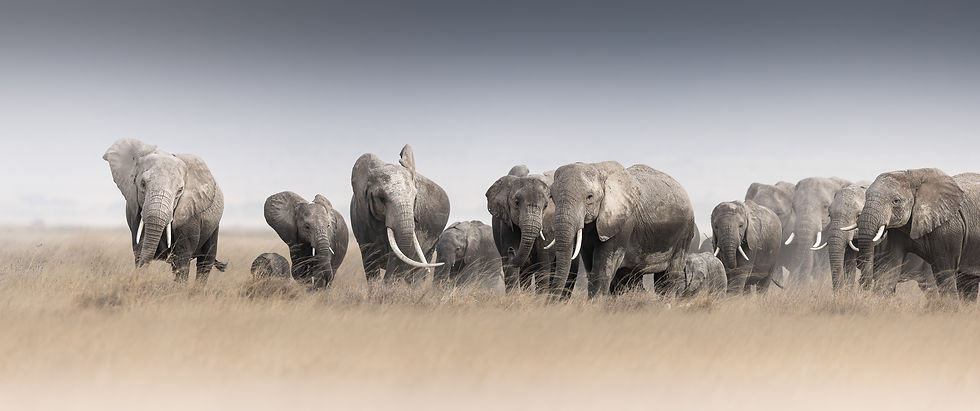
Often referred to as the land of giants, Amboseli is best known for its elephant herds. Generations of families move slowly across dusty plains and seasonal wetlands, creating extraordinary opportunities for photographers to capture behaviour, interaction, and environmental compositions.

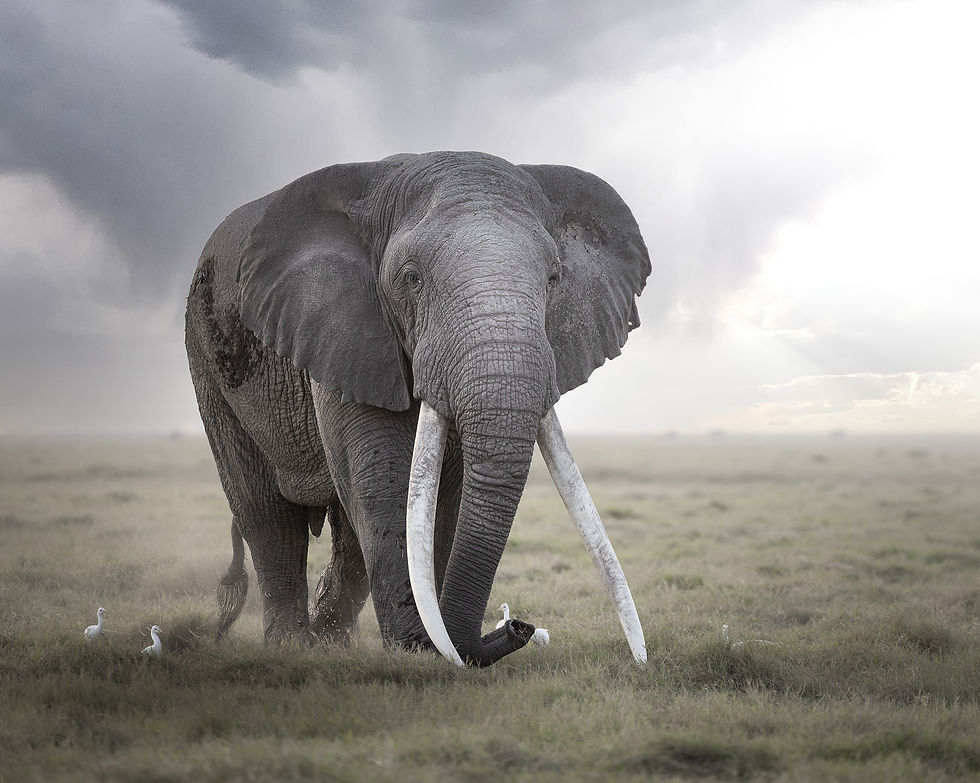
Some of my most memorable moments photographing elephants in Amboseli were spent with Craig, one of Africa’s most famous super tuskers who sadly passed away earlier this year. Watching Craig move across the plains with immense ivory sweeping toward the ground was something that defined the landscape for many photographers who visited the park.
While his passing marked the end of an era, Amboseli remains home to several other legendary tuskers whose presence continues to shape the ecosystem.
For wildlife photographers, Amboseli is not only about elephants or Kilimanjaro. It is about light, dust, scale, and patience. The openness of the terrain allows wildlife behaviour to unfold clearly in front of the camera, and when conditions align, the park offers some of the most iconic wildlife photography opportunities in East Africa.
Why Wildlife Photography in Amboseli National Park Is Unique
There are several reasons why wildlife photography in Amboseli stands apart from many other safari destinations.
1. OPEN TERRAIN AND VISIBILITY
Amboseli’s open plains provide long sightlines and uncluttered compositions. Wildlife can often be observed from great distances, giving photographers time to anticipate behaviour and position themselves carefully before raising the camera.
2. ELEPHANT DENSITY
Amboseli is famous for its elephant population. Large family groups move freely across the plains, often passing close to vehicles. This creates opportunities to photograph social behaviour, calf interactions, and the quiet dynamics that define elephant family life.
3. DUST AND ATMOSPHERE
During the dry season, elephants and other animals kick up clouds of dust as they move across the plains. When backlit by low sunlight, this dust creates glowing halos and dramatic atmosphere around the animals.
4. MOUNT KILIMANJARO BACKDROP
Few places in Africa allow wildlife to be photographed beneath such a dramatic natural landmark. When the summit appears above the clouds, Kilimanjaro becomes an extraordinary compositional element in wildlife photography.
Best Time of Year for Wildlife Photography in Amboseli National Park
REGION | BEST MONTHS | TECHNICAL ADVANTAGES | PHOTOGRAPHIC FOCUS |
|---|---|---|---|
OPEN PLAINS (Central Amboseli) | YEAR ROUND (Peak: Jun - Oct) | Open terrain allows long sightlines and clean compositions. Dust in dry season enhances backlight and atmospheric depth | Elephant families moving across plains, dust silhouettes, environmental compositions |
MARSHLANDS & SWAMPS | YEAR ROUND | Permanent water attracts wildlife even during dry periods. Vegetation creates layered framing | Elephant drinking behaviour, buffalo and waterbird activity |
DRY LAKEBED (Lake Amboseli) | JUN - OCT | Permanent water attracts wildlife even during dry periods. Vegetation creates layered framing | Elephant silhouettes, lone animals against vast landscapes |
KILIMANJARO VIEW CORRIDORS | JAN - MAR & OCT | Flat reflective surfaces create minimalist compositions and dramatic scale | Elephants framed beneath Kilimanjaro, sunrise environmental scenes |
Photographing Elephants in Amboseli National Park
Elephants define the photographic identity of Amboseli. The park’s herds are among the most studied in Africa, and their familiarity with vehicles allows photographers to observe behaviour in remarkable detail.
Large family groups move slowly across the plains, often feeding as they travel between water sources. Calves stay close to their mothers, while older juveniles play and spar with one another. Mature bulls move independently, sometimes appearing suddenly across the horizon as they travel between herds.
Among these bulls are the rare super tuskers, elephants whose ivory grows so large that it nearly touches the ground. Craig was one of the most famous of these individuals, and photographing him in Amboseli was always unforgettable. Even at a distance, his presence dominated the landscape.
From a photographic perspective, elephants in Amboseli offer extraordinary versatility.
Low angles emphasise their scale and presence. Dust kicked up by their movement creates atmospheric backlight. Wider compositions allow photographers to include the surrounding plains and sky, creating images that convey the vastness of the ecosystem.
The key is patience. Elephants rarely move quickly, but their behaviour unfolds gradually. Waiting for subtle interactions—trunks touching, calves moving between adults, dust bathing in golden light—often leads to the most powerful images.
Using Mount Kilimanjaro in Wildlife Photography
Photographing wildlife beneath Mount Kilimanjaro is one of the most iconic opportunities in African photography.
However, Kilimanjaro is not always visible. Clouds often cover the summit for much of the day, and photographers must learn to recognise the brief windows when the mountain reveals itself.
Early mornings offer the best chance. As the first light spreads across the plains, the clouds sometimes lift just enough for the peak to appear above the horizon. When this happens, positioning wildlife between the camera and the mountain can create extraordinary compositions.
Elephants moving across the open plains beneath Kilimanjaro create a sense of scale that is difficult to replicate anywhere else. Even simple silhouettes become powerful when framed against the mountain.
But like much of wildlife photography, success depends on patience. Some mornings Kilimanjaro never appears at all.
And then on others, it emerges just long enough to create a photograph that defines the entire safari.
Practical Considerations for Wildlife Photography in Amboseli
Wildlife photography in Amboseli is not technically complicated, but understanding the environment can significantly improve results.
Dust Management
Dust is constant in Amboseli, particularly during the dry season. Elephant movement can create thick suspended particles that remain in the air for long periods.
A rain or dust cover is extremely useful, and I always carry a small puffer to clean camera mounts before changing lenses.
Dust can also become a creative element. Backlit particles often add depth and atmosphere to otherwise simple compositions.
Heat Haze
Heat haze can appear during the middle of the day when temperatures rise above the plains. While it rarely affects early morning photography, it can soften images taken at longer distances later in the day.
Rather than pushing through harsh midday light, this is usually the best time to take a break, review images, and prepare for the afternoon session.
Light and Timing
Morning and late afternoon remain the most reliable windows for both wildlife behaviour and quality light. The low angle of the sun enhances dust, highlights texture, and produces warmer tones across the landscape.
Recommended Gear for Wildlife Photography in Amboseli National Park
SCENARIOS | RECOMMENDED FOCAL LENGTH | WHY IT WORKS | NOTES FROM THE FIELD |
|---|---|---|---|
Elephant Portraits & Behaviour | 300-500mm | Allows strong subject isolation while maintaining respectful distance | I primarily use a Canon 300mm f/2.8 or Canon 500mm f/4 |
Environmental Elephant Photography | 70-200mm | Captures landscape scale and Kilimanjaro context | Essential for environmental storytelling |
Elephant Herd Movement | 200 - 500mm | Flexible range for tracking moving herds | Useful when photographing large family groups |
Kilimanjaro Silhouettes | 70-200mm | Balanced framing between wildlife and mountain | Best during early morning conditions |
Dust & Backlit Scenes | 300-600mm | Compresses atmospheric dust layers | Dust cover recommended |
Who Amboseli National Park Is Best Suited For
Amboseli works exceptionally well for wildlife photographers of all experience levels.
For beginners, the ecosystem is forgiving. Wildlife is abundant and often visible in open terrain, making it easier to learn how animals move and behave within the landscape.
For more experienced photographers, Amboseli offers deeper opportunities for creative exploration. Elephant behaviour, dust atmosphere, and environmental compositions beneath Kilimanjaro create space for artistic storytelling that extends beyond simple wildlife portraits.
Perhaps most importantly, Amboseli rewards patience.
The strongest photographs rarely come from chasing sightings across the plains. They emerge from slowing down, reading behaviour, and allowing moments to develop naturally.
A Final Perspective on Wildlife Photography in Amboseli National Park
Wildlife photography in Amboseli is about scale and presence.
Elephants moving across open plains, dust rising in golden light, and the distant outline of Kilimanjaro combine to create scenes that feel timeless. The ecosystem reveals itself slowly, rewarding photographers who are willing to observe rather than rush from sighting to sighting.
For those who take the time to understand its rhythms, Amboseli consistently delivers some of the most iconic wildlife photography opportunities in Africa.
Join Me in Amboseli
Amboseli National Park is one of the destinations I regularly guide photographers to as part of my Kenya wildlife photography safaris. The park offers extraordinary opportunities to photograph elephant families beneath Mount Kilimanjaro, work with atmospheric dust light, and develop strong environmental wildlife compositions.
I guide small photographic groups using customised safari vehicles, ensuring photographers have the space and flexibility needed to work comfortably with long lenses and position themselves carefully in the field. With fewer guests per vehicle, there is more time to observe behaviour, refine compositions, and allow moments to unfold naturally.
If photographing elephants in Amboseli is something you would like to experience, you can join me on one of my upcoming Kenya photographic safaris that include dedicated time in Amboseli National Park.
Upcoming Safaris Featuring Amboseli:
ULTIMATE KENYA WILDLIFE PHOTO SAFARI: August 26 - September 6, 2027
(Amboseli National Park, Masai Mara National Reserve, Shompole Photo Hides)
WILD KENYA PHOTO SAFARI: August 9 - 19, 2027
(Amboseli National Park, Tsavo West National Park/Lumo Conservancy Photo Hide, Masai Mara National Reserve)
Both safaris are designed specifically for photographers and are available for booking for 2027 departures.
If you would like to experience wildlife photography in Amboseli National Park firsthand, you can explore upcoming safari departures through my tours page.


