
Night Wildlife Photography from Kenya’s Photographic Hides
Ethical low-light photography from Kenyan hides — featuring nocturnal wildlife captured with controlled lighting systems
This portfolio showcases nocturnal wildlife photography taken from purpose-built photographic hides in Kenya, using carefully controlled continuous lighting — no flash — to photograph natural behavior after dark.

Photographing African wildlife at night requires precision — in lighting, camera technique, and fieldcraft. Over the past several years, I’ve spent months inside Kenya’s professional photographic hides, often alongside my husband, developing a deep understanding of nocturnal wildlife behavior and the technical challenges of working after dark. This portfolio represents some of the most refined and ethically captured night imagery in African wildlife photography.


These hides are located near waterholes and known wildlife corridors, allowing us to work for extended hours — often through the night — without disturbing the animals. We’ve captured lions, leopards, hyenas, elephants, caracals, and African wild cats, behaving naturally in their nighttime environment, thanks to a lighting system we control manually and adjust based on real-time behavior.


All lighting is continuous and dimmable, with no flash or sudden bursts. The system is designed to be adaptive — lighting is slowly increased or softened based on proximity, comfort, and species. This ethical approach has allowed us to capture truly rare behaviors while maintaining the integrity and safety of the wildlife.

Technically, this work involves full manual control: high ISO performance, fast prime lenses, and intentional exposure management to work in near-total darkness. Remote triggers and real-time adjustments allow us to shoot silently and discreetly, maintaining a low visual footprint while capturing high-quality imagery.

We’ve documented interactions and behaviors that very few photographers have had the opportunity to witness — from lions hunting under moonlight to elephants investigating the edge of the hide. This body of work comes from a long-term commitment to working ethically, patiently, and with respect for the animals and environments we photograph.
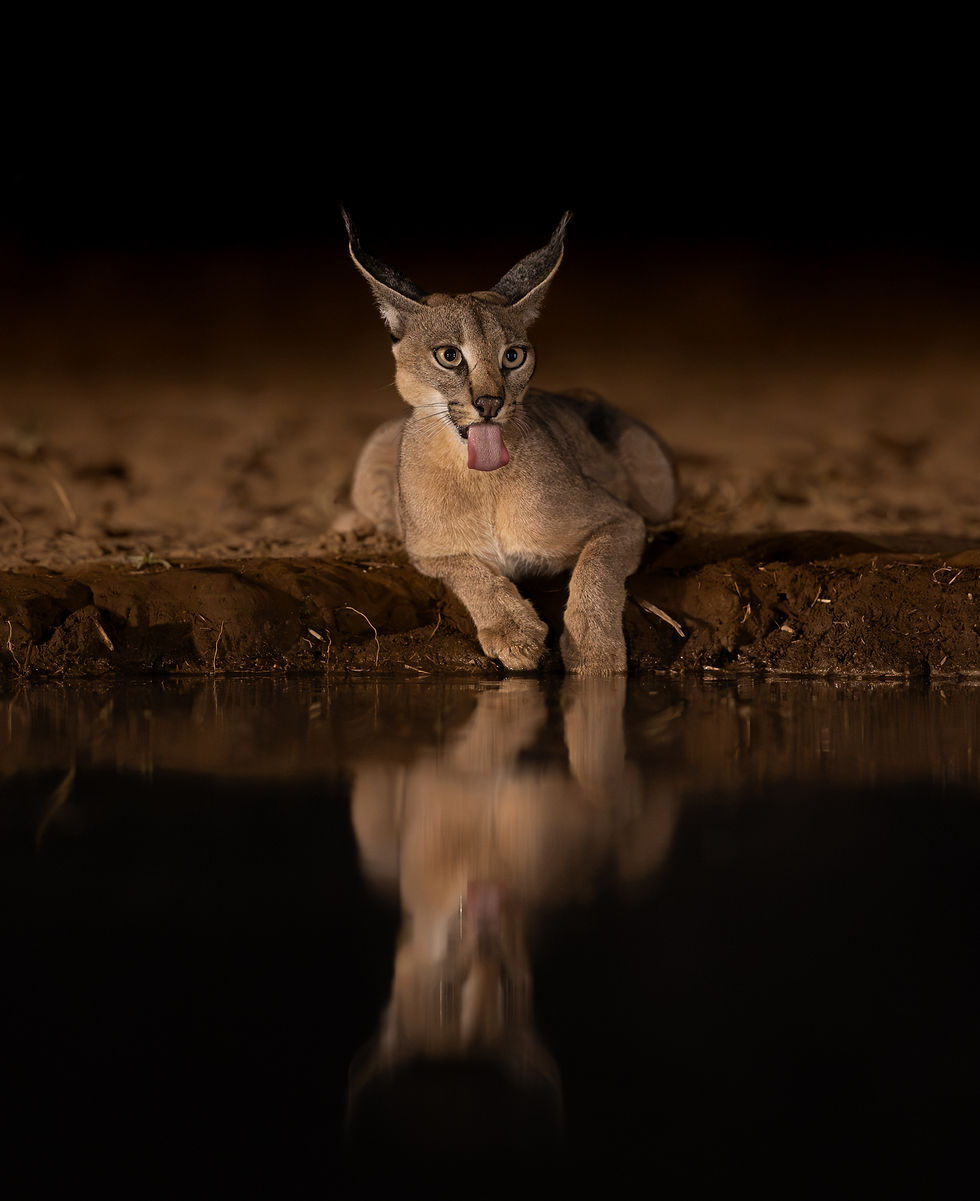


All images in this portfolio are available as fine art wildlife prints or for editorial and conservation licensing. If you’re a photographer looking to learn more about ethical night photography, or a collector searching for unique nocturnal imagery from Africa, you’re welcome to connect.
